The Ethereal Sanctuary: A Journey to Seeta Amman Kovil, Nuwara Eliya
"Where the mountain mists cradle ancient legends, and the stream whispers the sorrows of a queen—Seeta Amman Kovil stands as a testament to an eternal devotion that transcends time itself."
The Experience: A Symphony of Mist and Devotion
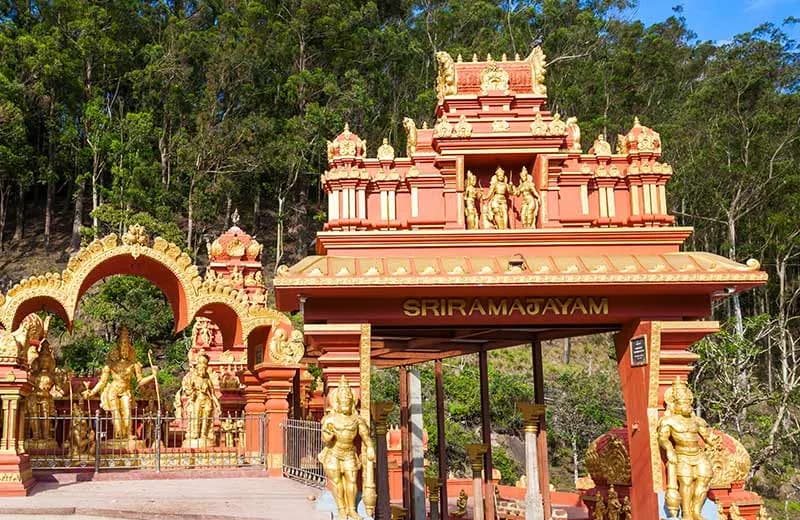
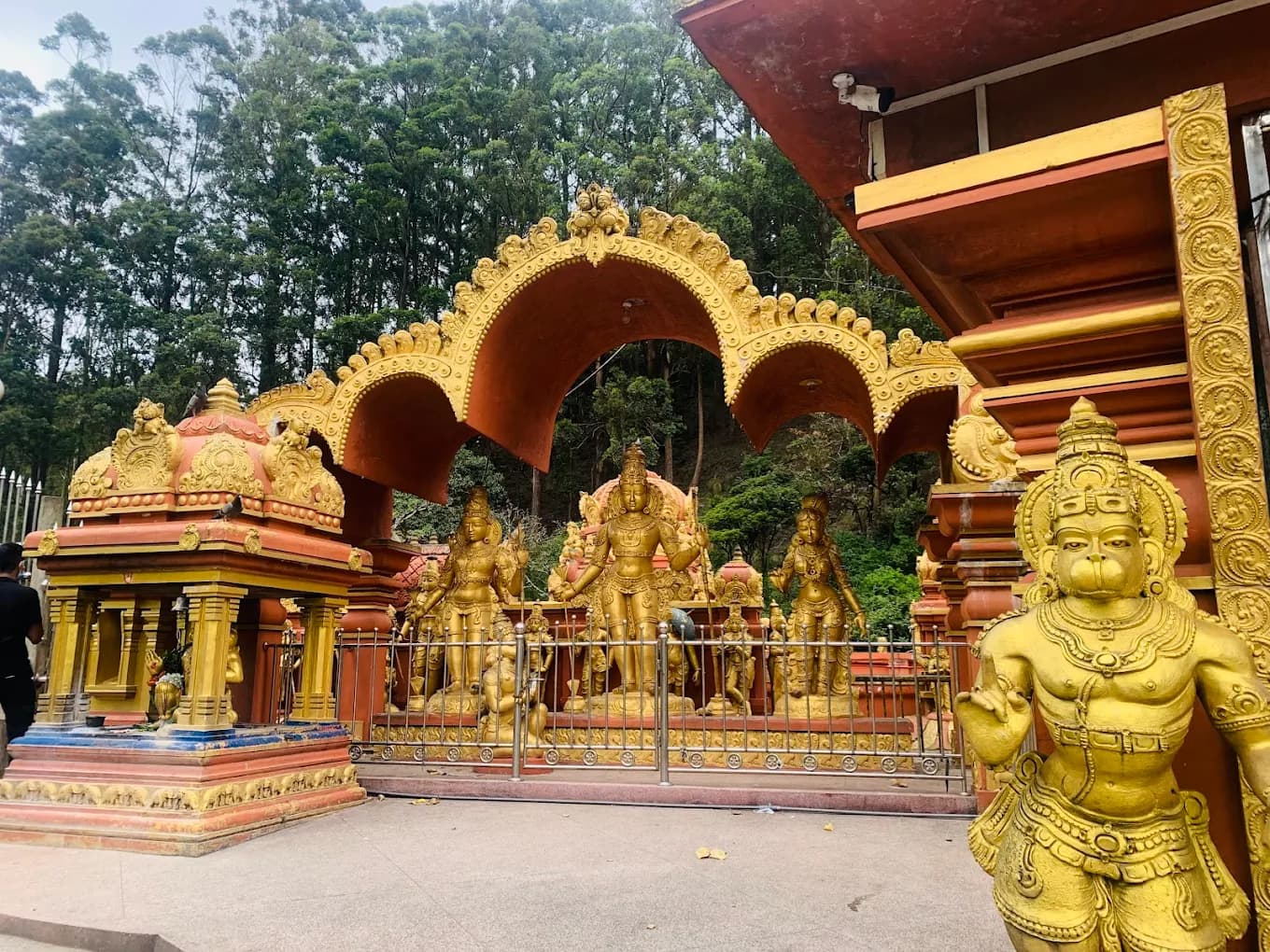
Perched amidst the emerald peaks of the Central Highlands in Sri Lanka, the Seeta Amman Kovil is more than a temple; it is a visceral experience of history meeting divinity. Located in the picturesque village of Seetha Eliya, just a heartbeat away from the colonial charm of Nuwara Eliya, this sacred site is the only temple in the world dedicated to Goddess Seeta. For the discerning traveler, the arrival here is a sensory awakening—the crisp, thin air of the high altitude, the scent of damp earth and cedar, and the vibrant hues of the temple’s Dravidian architecture contrasting against the deep greens of the surrounding forest.
The temple is built on the very site where, according to the epic Ramayana, Goddess Seeta was held captive by King Ravana in the Ashoka Vatika. As you walk through its hallowed grounds, the spiritual resonance is undeniable. The most striking feature for an elite visitor is the tranquility of the stream that flows beside the temple. Legend says the goddess bathed in these waters, and the peculiar circular depressions in the bedrock are believed to be the footprints of Lord Hanuman, the monkey god, who leaped across the ocean to find her. This is not merely a stop on a tourist map; it is a portal into a mythological epoch.
Architectural Grandeur and Cultural Significance
The Seeta Amman Kovil is a masterpiece of modern craftsmanship reflecting ancient traditions. The temple’s exterior is adorned with intricately carved sculptures of deities, painted in a palette of celestial blues, oranges, and golds. Every pillar tells a story of the Ramayana, inviting visitors to delve deep into the cultural fabric of South Asia. Unlike the sprawling temples of Southern India, this sanctuary offers an intimate connection with the divine, characterized by its boutique scale and breathtaking natural backdrop.
For those who appreciate the finer details of cultural history, the site offers a profound look at how landscape and legend intertwine. The rocks surrounding the stream are considered relics of a forgotten era, and the temple’s preservation as a site of pilgrimage for thousands of years speaks to its enduring power. It is a place where the elite can find a rare commodity: absolute stillness.
Hidden Secrets and Exclusive Encounters
Beyond the main shrine lies a world of hidden gems. For an exclusive experience, we recommend a private guided walk through the adjacent Hakgala Botanical Gardens. Often cited as part of the original Ashoka Vatika, these gardens house rare flora that thrive only in this microclimate. Request a private horticultural expert to show you the 'Tree of Sorrow' (Saraca asoca), under which Seeta is said to have spent her days.
Another local secret is the 'Hanuman Footprint Trek', a short but steep climb led by local devotees that offers a panoramic view of the Seetha Eliya valley—a vista usually reserved for the gods. To truly experience the temple's magic, arrange for a private Sankalpa Puja at dawn. The absence of crowds, the flickering oil lamps, and the rhythmic chanting of the priests create an atmosphere of unparalleled exclusivity.
Culinary Excellence in the Highlands
Nuwara Eliya, often called 'Little England,' offers a culinary scene that mirrors its colonial past and vibrant present. After a morning of spiritual exploration, indulge in the following:
- High Tea at The Grand Hotel: A quintessential Nuwara Eliya experience. Sip on rare, single-estate Ceylon Tea accompanied by artisanal scones and Devonshire cream in a setting of Victorian elegance.
- Farm-to-Table Gastronomy: Visit Amba Estate or local boutique villas for a private tasting of organic highland produce, including the region's famous strawberries and artisanal cheeses.
- Traditional Tamil Cuisine: For a more authentic touch, private chefs can prepare a 'Sattvic' meal featuring local mountain greens, lentils, and traditional breads, echoing the simplicity and purity of the temple atmosphere.
The Elite Journey: How to Get There
Seeta Amman Kovil is located approximately 170 kilometers from the capital city of Colombo. For the luxury traveler, the journey is as important as the destination.
- By Air: The most seamless way to arrive is via Cinnamon Air. A private or scheduled seaplane flight from Colombo’s Bandaranaike International Airport (BIA) or Waters Edge to Lake Gregory in Nuwara Eliya takes just 30 minutes, offering a bird’s-eye view of the cascading waterfalls and mist-drenched tea estates.
- By Luxury Chauffeur: A private transfer in a premium SUV (such as a Range Rover or Mercedes-Benz) allows for a scenic 5-hour drive through the winding roads of the Kaduwela-Hatton route, where you can stop at your leisure for photography or a quick tea tasting.
- The Observation Deck Train: For a touch of old-world romance, book the first-class observation cabin on the morning train from Kandy to Nuwara Eliya (Nanu Oya station), often cited as one of the most beautiful train journeys in the world.
When to Visit
The best time for an elite traveler to visit is from February to April, when the highlands are in full bloom and the weather is crisp and clear. This coincides with the Nuwara Eliya 'Season.' For those seeking a more moody, atmospheric experience with fewer crowds, the months of September and October offer a mystical charm, with heavy mists rolling over the temple peaks, perfect for photography and quiet reflection.
Seeta Amman Kovil is not just a destination; it is a bridge between the physical and the mythical. It invites the world-class traveler to step away from the mundane and into a story that has been told for five millennia, all while wrapped in the cool, luxurious embrace of the Sri Lankan highlands.