Nagadeepa Purana Vihara: A Sacred Odyssey Across the Azure Waters of Jaffna
In the far reaches of Sri Lanka’s northern frontier, where the turquoise shimmer of the Palk Strait meets a horizon of infinite clarity, lies an island of profound spiritual resonance. Nagadeepa, or Nainativu, is not merely a destination; it is a pilgrimage into the soul of an ancient land. For the elite traveler seeking more than just a getaway, this sacred island offers a rarefied blend of historical depth, cultural synthesis, and a serene isolation that is increasingly rare in the modern world. Here, the air is thick with the scent of sea salt and burning camphor, and the silence is punctuated only by the rhythmic chanting of monks and the distant tolling of temple bells.
Nagadeepa is the threshold where the temporal meets the eternal—a shimmering silver beacon in the heart of the Jaffna lagoon that whispers secrets of a pre-recorded era.
The Sacred Tapestry: An Illustrious History
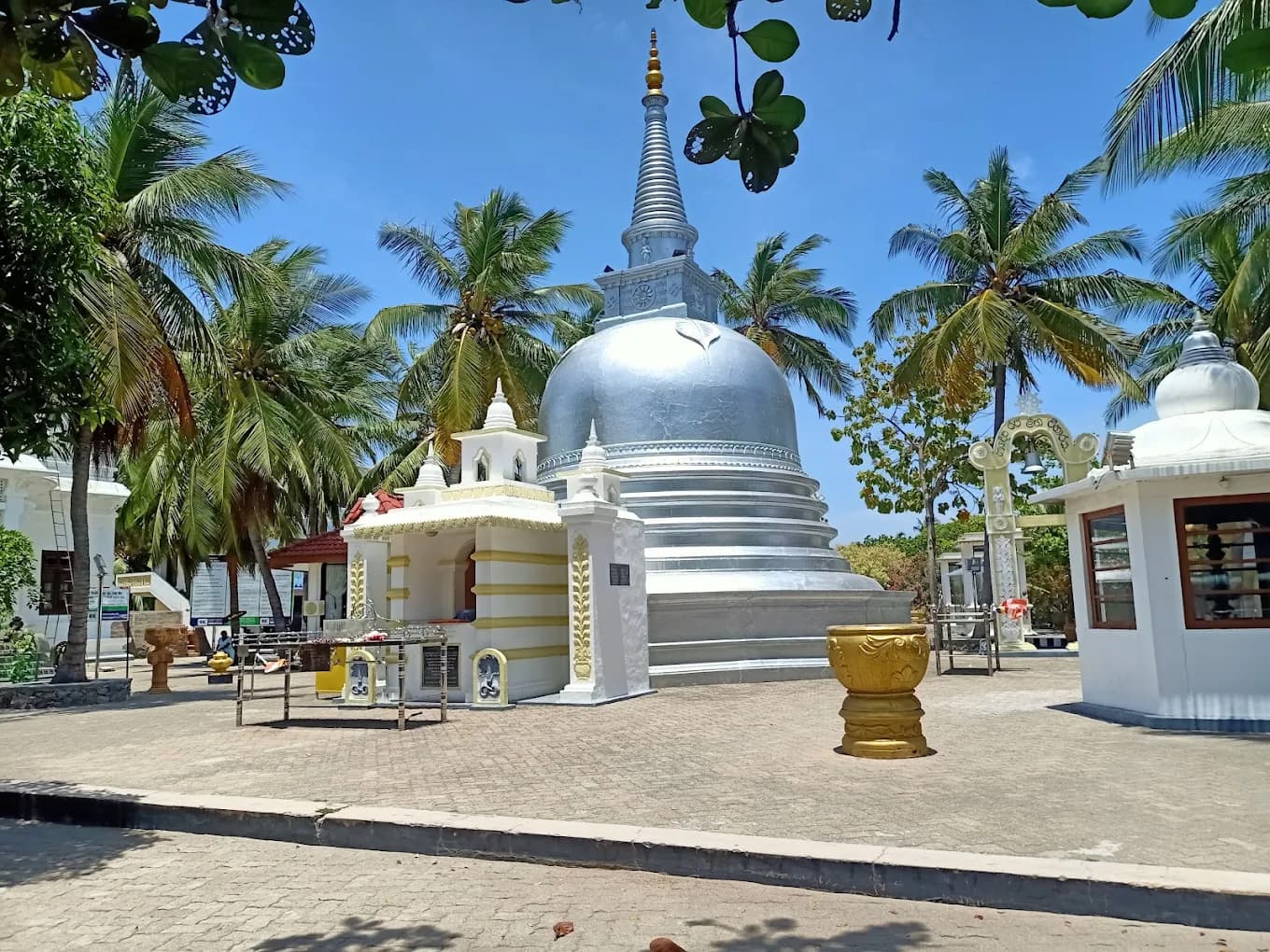
The significance of Nagadeepa Purana Vihara transcends its physical structure. It is revered as one of the Solosmasthana, the sixteen holiest Buddhist sites in Sri Lanka. According to ancient chronicles, this was the site of the Buddha’s second visit to the island, five years after his enlightenment. He arrived here to settle a dispute between two Naga kings, Chulodara and Mahodara, over a gem-encrusted throne. The resolution of this conflict through the philosophy of non-violence remains the cornerstone of the temple’s sanctity. Today, the silver-painted stupa stands as a testament to this peace, its reflective surface catching the intense northern sun and casting a celestial glow over the surrounding palms.
The Sensory Experience: A Journey of the Soul
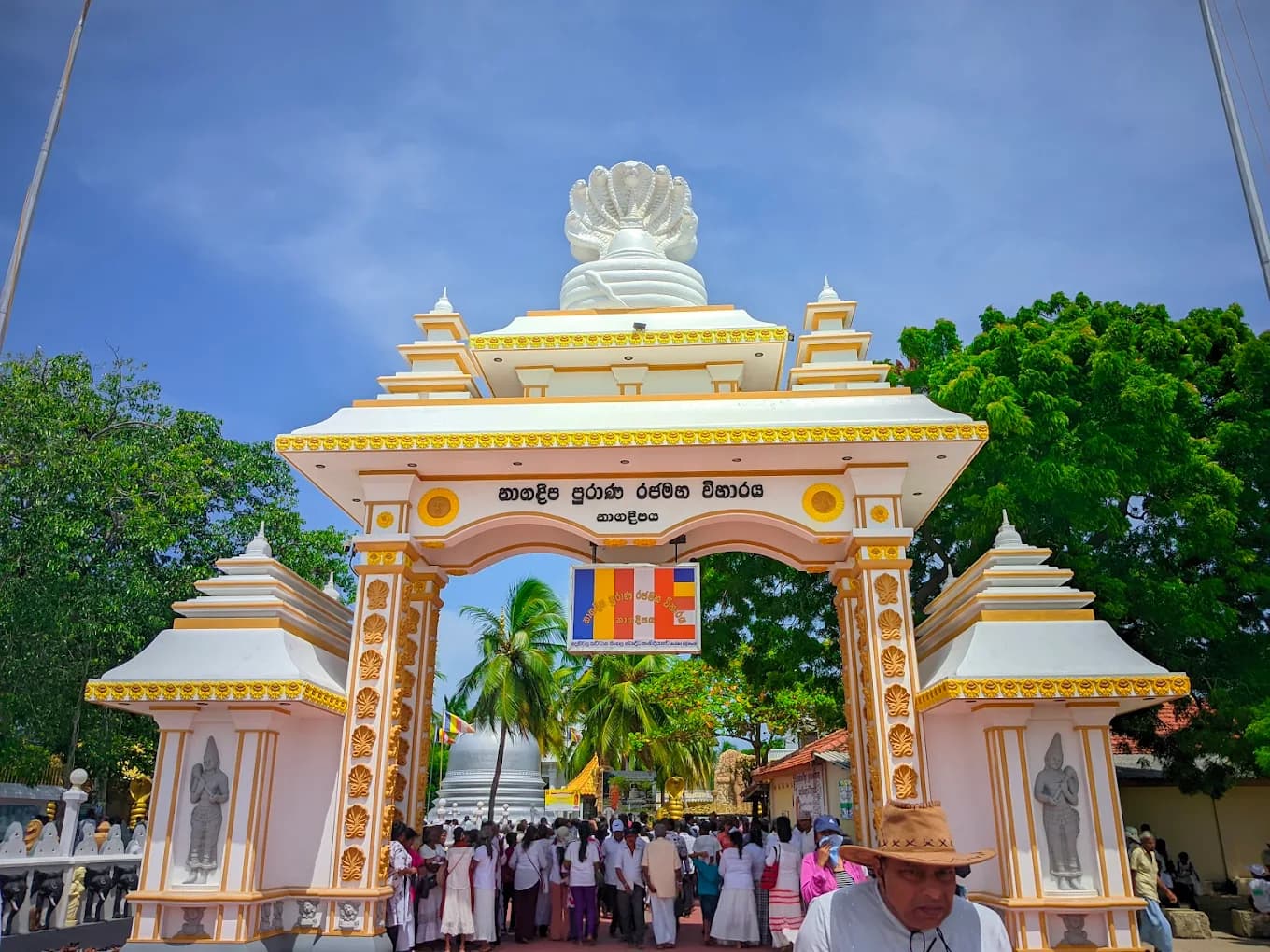
Arriving at Nagadeepa is a sensory revelation. As your private vessel glides through the calm lagoon, the island emerges like a mirage. The primary stupa, a pristine white dome crowned with a shimmering pinnacle, dominates the landscape. Upon stepping onto the island, the transition from the bustling mainland of the Jaffna Peninsula to the tranquil sanctity of Nainativu is palpable. The ground is a soft, sun-warmed sand that invites you to walk barefoot, connecting directly with the earth’s energy. The architectural aesthetic is a blend of traditional Sri Lankan Buddhist motifs and the distinct, vibrant influences of Northern Hindu culture, creating a visual harmony that is unique to this region.
Hidden Secrets and Cultural Synthesis
One of the most compelling aspects of Nagadeepa is its proximity to the Nagapooshani Amman Kovil, a magnificent Hindu temple dedicated to the goddess Parvati. For the discerning traveler, this proximity offers an exclusive glimpse into the religious syncretism of Sri Lanka. Witnessing devotees transition seamlessly from the Buddhist Vihara to the Hindu Kovil is a masterclass in cultural fluidity.
- The Sacred Bodhi Tree: Located within the temple grounds, this ancient tree is said to be a sapling of the original Jaya Sri Maha Bodhi. It provides a canopy of profound peace for meditation.
- The Gem-Encrusted Throne: While the original throne is believed to be enshrined within the stupa, the symbolic representation of this relic serves as a focal point for intense spiritual reflection.
- Antique Inscriptions: Look for the stone inscriptions nearby that detail the royal patronage the temple received from ancient Sinhalese kings, confirming its long-standing importance in the national narrative.
Culinary Excellence: The Flavors of the North
A journey to Nagadeepa is incomplete without indulging in the sophisticated, spice-laden palate of Jaffna. The region’s cuisine is an intricate dance of heat and aromatics. After your morning exploration, return to the mainland for a curated private dining experience featuring Jaffna Crab Curry—a dish famed for its use of murunga leaves and a secret blend of roasted spices. For those seeking a lighter, more refreshing local secret, the Palmyra Fruit (Nungu) is a must-try. This translucent, jelly-like fruit, harvested from the ubiquitous palmyra palms, offers a cooling relief from the tropical warmth and is a staple of northern luxury hospitality.
Logistics: Arriving in Elegance
Nagadeepa is located approximately 35 kilometers from Jaffna City. For the elite traveler, the journey is as significant as the destination. We recommend the following modes of transport to ensure a seamless and sophisticated arrival:
- Private Chauffeur & Luxury SUV: Depart from your luxury hotel in Jaffna (such as Jetwing Jaffna or the North Gate by Jetwing) for a scenic 1-hour drive through the causeways of the Palk Strait, offering breathtaking views of the lagoon’s birdlife.
- Private Boat Charter: Upon reaching the Kurikadduwan (KKD) Jetty, bypass the local ferries and opt for a private, high-speed boat charter. This allows for an exclusive entry to the island, avoiding crowds and providing a panoramic view of the coastline.
- Air Travel: For those arriving from Colombo, a private charter flight to Palaly International Airport is the most time-efficient and prestigious option, followed by a luxury vehicle transfer to the jetty.
When to Visit: The Golden Window
To experience Nagadeepa at its most ethereal, the best time to visit is during the dry season, from January to September. The months of May and June are particularly significant due to the Vesak and Poson Poya festivals, though these can attract large crowds. For the luxury traveler seeking exclusivity and favorable weather, February and March offer cool breezes and crystal-clear skies. To avoid the midday heat and witness the temple in its most atmospheric light, aim for an early morning arrival (around 7:30 AM) or a late afternoon visit just before sunset, when the silver stupa reflects the hues of the gloaming.
Nagadeepa Purana Vihara is more than a landmark; it is a silent witness to history and a sanctuary of peace. In the stillness of its shadow, one finds a luxury that cannot be bought: the luxury of absolute tranquility and a profound connection to the divine.